Entry · Ref DGUU9OK_
Why Website Design for Contractors Matters More Than You Think
- Posted
- 2026-10-09
- Last amended
- 2026-10-09
- Account
- @mywebsitedesigncontractorstips
When I first started working with contractors in the Chicagoland area, I noticed something surprising. Many of them were running successful businesses based on word-of-mouth and a solid reputation. They had years of experience, a truck full of tools, and a steady stream of referrals. But when I looked at their websites, I saw the same problems over and over. Slow load times. Broken contact forms. Photos that looked like they were taken on a flip phone from 2008. And in many cases, no website at all.
That last one always threw me. A business that spends thousands on trucks, tools, and crew training but skips a proper online presence is leaving money on the table. I get it. Contractors are busy. You are out in the field, estimating jobs, managing crews, and dealing with clients. A website feels like something you can get to later. But later never comes, and by then a competitor has already picked up three jobs because they showed up first in a local search.
Good website design for contractors is not about flashy animations or trendy fonts. It is about function. It is about making sure a homeowner in Des Plaines who just searched for a roofer can find you, trust you, and pick up the phone within ten seconds of landing on your page. That is the real goal. And it takes more than just a template you bought for fifty bucks.
Connect with us on LinkedIn.
What Makes a Contractor Website Actually Work
Over the years, I have looked at hundreds of contractor websites. The ones that generate leads share a few common traits. They load fast on a mobile phone. They have clear calls to action, like a phone number at the top of every page. They show recent work with good photos and honest descriptions. And they make it easy for someone to request a quote without jumping through hoops.
I worked with a general contractor in the northwest suburbs who had a site that took seven seconds to load. Seven seconds. Most people will wait about three before they hit the back button. He was losing leads every single day without realizing it. After we rebuilt the site with a focus on speed and mobile usability, his contact form submissions went up by a factor of four within two months. That is not a theory. That is what happens when you treat your website like a tool instead of a brochure.
Another thing I see a lot is contractors trying to do everything themselves. I respect the DIY spirit. But building a site that ranks in local search, converts visitors, and looks professional on every screen size is a different skill set from framing a house or wiring a basement. There is no shame in hiring someone who knows what they are doing. In fact, it usually saves you money in the long run because you stop guessing and start getting results.

Local SEO and the Contractor Advantage
Contractors have a natural advantage in local search. People search for emergency plumbers, electricians, and roofers with a sense of urgency. They type things like "furnace repair near me" or "best deck builder in Arlington Heights." If your site is set up correctly, you can capture those searches and turn them into paying jobs. But your website needs to be structured in a way that search engines understand. That means having the right headings, local content, and fast hosting. It also means claiming your Google Business Profile and making sure your name, address, and phone number are consistent everywhere online.
I have seen contractors spend thousands on paid ads and ignore the fact that their website was sending the wrong signals to Google. A good foundation in website design for contractors includes local SEO basics. Things like adding a service area page for each town you work in, writing descriptions that include your actual services, and making sure your site is secure with HTTPS. These are not optional anymore. They are the price of entry.
One roofer I worked with had a site that was technically fine. It looked okay on a desktop and had decent photos. But it had no local content at all. No mention of the suburbs he served, no street-level details, no project pages that linked to specific towns. After we added a few pages about roofing work he had done in specific communities, his organic traffic from those areas doubled in about six weeks. That kind of result does not require a huge budget. It just requires thinking about your website as a living document that needs regular updates.
Common Mistakes Contractors Make With Their Websites
I have seen the same patterns emerge again and again. Here are the most common ones, and why they hurt your business.
- Using a generic template that looks like every other contractor site. No branding, no personality, no reason for a homeowner to choose you over the next guy.
- Not having a mobile-friendly design. More than half of local searches happen on a phone. If your site is hard to navigate on a small screen, you are invisible to a huge chunk of potential customers.
- Hiding contact information. I cannot tell you how many sites bury the phone number at the bottom of a page or make you click through three menus to find it. Put it in the header. Make it clickable.
- Using stock photos. Homeowners can tell when a photo is not from a real job. It erodes trust. If you do not have good photos, take some. Even a phone camera can produce decent shots if you have good lighting and a clean work site.
- Not having a clear call to action. Every page should guide the visitor toward the next step, whether that is calling, filling out a form, or browsing a gallery. Do not assume they know what to do.
How to Plan a Budget for a Contractor Website
I get asked about cost a lot. The honest answer is that it depends. A basic site that just lists your services and contact info can be relatively inexpensive. But a site that actually generates leads requires investment in design, copywriting, and ongoing maintenance. Think of it as a business expense, like insurance or a new truck. The right website pays for itself many times over if it brings in even a handful of extra jobs per year.
If you are on a tight budget, focus on the essentials first. Get a fast, secure domain and hosting. Use a clean, mobile-responsive theme. Write your own copy if you have to, but make sure it is clear and free of typos. Add high-quality photos of your actual work. Then, as you grow, reinvest some of your profits into professional design and SEO. That approach works better than spending three thousand dollars on a site that nobody visits because it was built without a strategy.
A thoughtful approach to website design for contractors treats the site as a sales tool. Every element should have a purpose. The navigation should be simple. The text should answer common questions before the visitor even asks them. The loading speed should be fast enough that nobody has time to get frustrated. And the whole thing should be built with the understanding that most visitors are on a phone, probably in a hurry, and probably comparing you to at least two other contractors.
Keeping Your Website Fresh
One of the biggest challenges I see is that contractors build a site and then forget about it. They launch it, get a few leads, and assume the work is done. But search engines reward fresh content. A site that has not been updated in two years sends a signal that the business might be inactive or out of date. Adding a blog post once a month, updating your project gallery, or even just refreshing your headline can make a difference.
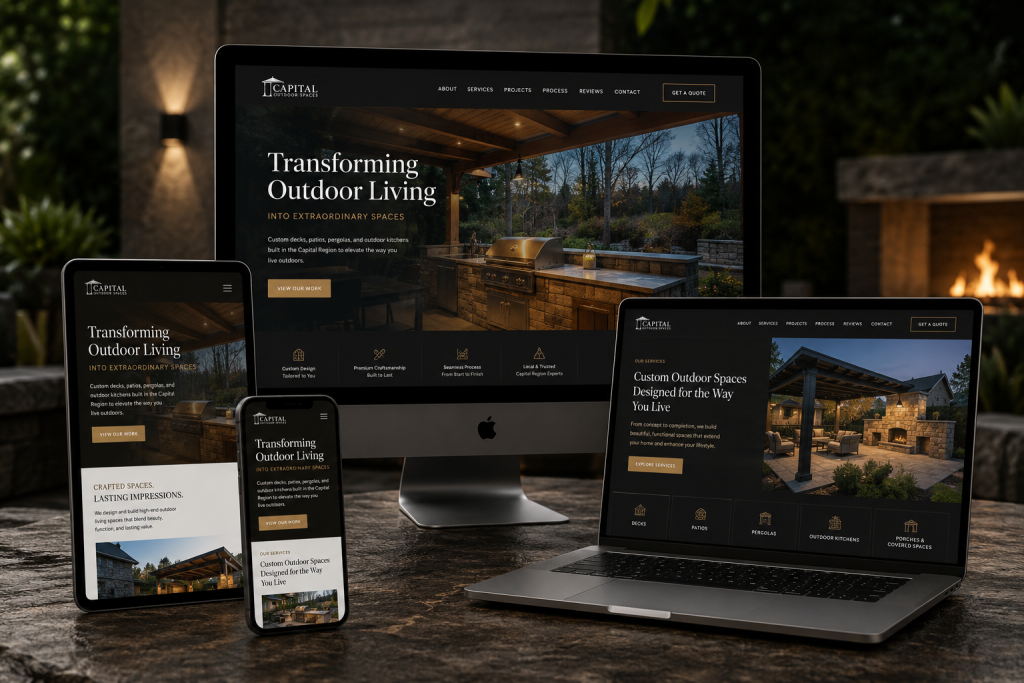
I have a client who runs a small remodeling company. He adds a new project page every time he finishes a job. It takes him about fifteen minutes. He includes a few photos, a short description, and the town where the work was done. That simple habit has kept his site ranking well for local searches in his area. It also gives potential clients a real look at his work. That kind of authenticity is hard to fake and easy to maintain.
If you are a contractor reading this, you might be thinking that you do not have time for any of it. I understand. Running a contracting business is demanding. That is why so many contractors choose to work with an agency that handles the technical side. You focus on what you do best, and they handle the website, the local SEO, and the paid ads. It is a partnership that works when both sides understand their role.
Lemur Marketing, located at 1574 Henry Ave, Des Plaines, IL 60016, USA, and reachable at +1 630-551-8493, is a digital marketing agency in Des Plaines, IL offering web design, local SEO, and paid advertising services tailored to contractors and local businesses in the Chicagoland area. They understand the specific challenges contractors face and build sites that actually produce results.